
Case studyProduct in development · closed testing
Veyra
A balance that can explain itself
A personal finance app built around a ledger, with planning, statement review, and reconciliation that trace balances to their history.
- Project
- Personal finance application
- Designed for
- People managing their personal finances
- Focus
- Ledger, connected planning, statement import, and reconciliation
What it does
Veyra is a personal finance app built around a ledger. Every balance follows from recorded events and entries, so the number on screen has a history behind it.
Budgets, bills, income schedules, goals, loans, and net worth sit around the same money core. A statement import stages transactions for review before they reach the ledger.
The problem
A balance alone cannot explain a duplicate import, a corrected transaction, or a payment posted twice. The app needed a traceable record of money movement and a clear distinction between a plan and a posted entry.
Our approach
We put money movement through one posting module. Balances are projections of the ledger, corrections retain the original history, and imported transactions use the same posting path as manual entries.
The interface connects that history to everyday questions: what is available, what is owed, what changed, and what is coming next.
Research and context
BSP’s 2025 survey reports both widespread personal budgeting and people’s satisfaction with their finances. These are separate questions, not a causal comparison. They provide Philippine context for Veyra’s balance history, bills, and planning without establishing demand for, or benefit from, this app. [1]
Two views of personal finances
Philippine adults aged 15+, Consumer Finance and Inclusion Survey, 2025. Separate self-reported indicators as a percentage of the adult population.
Preparing chart. The exact figures are available below.
| Measure | Value |
|---|---|
| Reported having a personal budget | 86% |
| Satisfied with current finances | 43% |
Nationally representative BSP survey with 8,784 completed interviews, February 16–July 24, 2025. Values are the rounded figures published in Figure 17 and adjacent text.
The questions do not identify overlap or satisfaction among budgeters. The difference is not an unmet-demand estimate. Neither indicator measures bookkeeping accuracy, tracking-app use, or Veyra outcomes.
Source [1]
What was built
One posting path
Manual entries and imported transactions use the same module to record money movement.
A history of corrections
Events can be voided or replaced while their original records remain in the ledger.
Statement review
PDF and CSV statements become staged entries, with possible duplicates surfaced before posting.
Dated reconciliation
Accounts can be checked against a statement at a chosen date, with the gap explained before an adjustment is confirmed.
Connected planning
Budgets, bills, schedules, goals, and loans use the same financial history while keeping planned amounts separate from posted entries.
Private account views
Requests require a signed-in user, and records are scoped to the account that owns them.
Product walkthrough
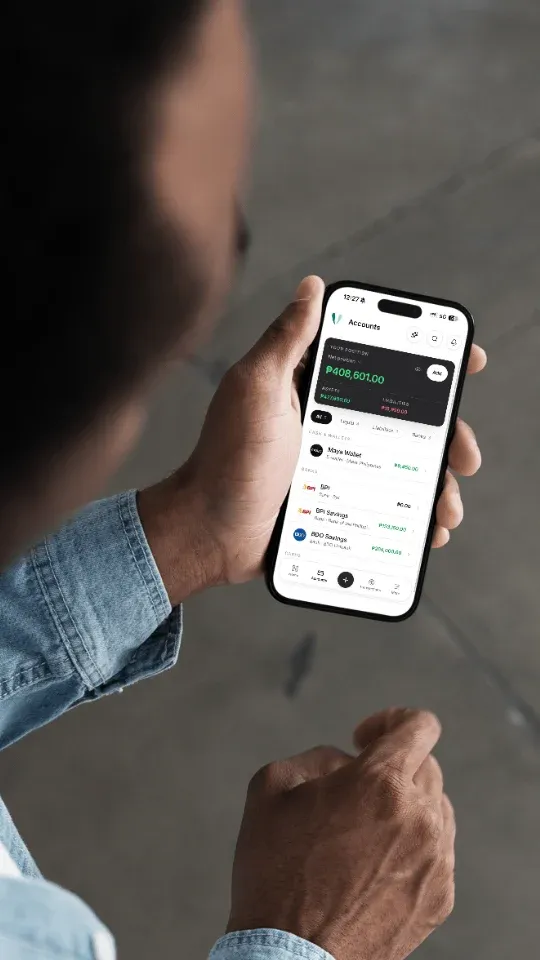
Review your position
The overview brings balances, debts, recent movement, and upcoming bills together.
Follow an account
An account connects its current balance to activity and the plans it is expected to fund.
Inspect the history
The transaction list shows the entries behind changes in position.
Review an import
Statement rows are staged and matched before the user chooses what to post.
Chapter 1
Chapter 2
Chapter 3
The outcome
The implemented app connects transaction history, account balances, planning, statement review, and reconciliation around one ledger. The case study demonstrates that deliverable without claiming measured financial or business results.
Scope and next steps
Veyra is a product in development. The reviewed source describes closed testing; this case study makes no claim about customer adoption or financial outcomes.
Subscription billing and entitlements are planned work. Amounts shown in the public sample tour are fictional and are not results achieved by users.
Sources
Bangko Sentral ng Pilipinas · 2026 report; findings announced April 14, 2026
2025 Consumer Finance and Inclusion SurveyPrinted page 8 (PDF page 14): personal budget and financial satisfaction; methodology gives population and fieldwork.
Project evidence
Reviewed implementation establishes the ledger, posting, import review, and reconciliation behavior. Recorded screens come from the public sample tour with fictitious finances, rather than an authenticated customer account. Closed testing is described in the source; no financial or commercial impact has been measured here.
Have a similar problem to solve?
Tell us how your business works and what you want to improve. We can shape the next step together.